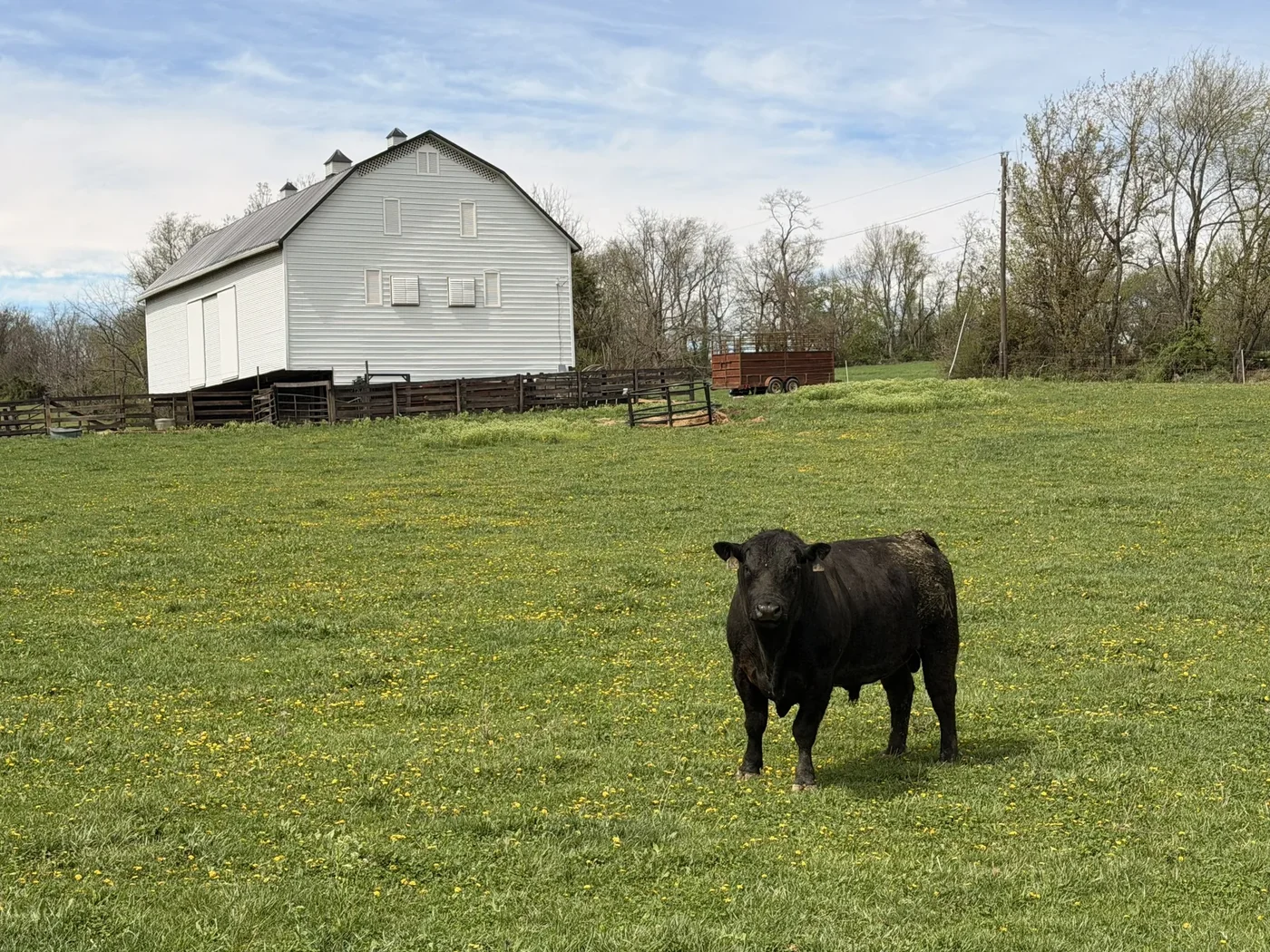
Brood cows or stockers?
That is one of the first questions Farm Choice asks. The next question is what the cattle are grazing and where. A brood-cow program, a growing/stocker program and a herd on different forage conditions do not automatically need the same mineral.
1. Cattle
Brood cows, replacement females or stockers? Stage of production, growth and intake matter.
2. Forage & location
Shenandoah Valley and Blue Ridge-area cattle commonly encounter tall fescue. Customers farther west may be working with different native-grass and forage conditions.
3. Goal & current program
What mineral are they eating now, at what intake, and what are you trying to improve? Bring the feed tag or forage information if you have it.
Build your cattle-mineral conversation
This does not diagnose a deficiency or choose a bag. It organizes the same facts Farm Choice wants before talking through a mineral program.
Cattle mineral is a program—not just a bag.
Brood cows and stockers are different conversations.
Pregnancy, lactation, growth and body size change nutrient requirements. A cow-calf herd and a group of growing stockers should not be treated as interchangeable.
Forage and geography matter.
Virginia Tech documents tall fescue as the predominant forage on more than a million acres of Virginia hay and pasture. Endophyte-associated alkaloids can reduce intake, gain, milk and reproductive performance.
Salt is not the same as a complete mineral.
Salt supplies sodium and chloride. Complete mineral programs may also supply calcium, phosphorus, magnesium and trace minerals such as copper, zinc, iodine and selenium—depending on what the total diet needs.
Intake is part of the formulation.
A label built for a 4-ounce intake only works as intended if cattle are actually consuming near the label target. Farm Choice asks what is being fed and how fast it is disappearing.
Calcium-to-phosphorus balance is one piece—not a diagnosis.
Calcium and phosphorus are major minerals and their balance matters in the total diet. Reproductive problems have many possible causes, so Farm Choice uses a concern as a reason to review the program, not to promise that one ratio will “fix” conception.
Species matter, especially around copper.
Cattle and sheep mineral should not be treated as interchangeable. Many cattle minerals contain added copper; sheep have a much lower tolerance for copper, so species-specific products matter.
Looking for cattle mineral near Harrisonburg?
Farm Choice is at 933 S High St in Harrisonburg. Customers looking for cattle mineral, high-magnesium mineral, Stocker mineral or cattle supplement tubs can call before making a special trip so we can check the current selection.
Feeding salt only? That is a different program.
Farm Choice does not assume every herd needs the most expensive mineral on the shelf. But plain salt and a complete mineral are not nutritionally equivalent, so “we put out salt” is useful information—not the end of the conversation.
What are the cattle actually consuming?
If you know how many pounds of mineral disappeared over a set number of days, this calculator converts it to ounces per head per day. Compare that number with the target on the current product tag.
- Primarily addresses sodium and chloride.
- May be part of a larger supplementation plan.
- Does not automatically cover calcium, phosphorus, magnesium or the full trace-mineral picture.
- Designed around a broader mineral and vitamin profile.
- Formula and target intake can change by forage, season and cattle class.
- The right answer depends on the whole diet—not the front of the bag.
High-magnesium mineral, Stocker mineral & supplement tubs
Farm Choice carries cattle-mineral and supplement lines from Hubbard and Crystalyx. Use the cards below to identify what you are looking for, then call for the current formula or tub.
 Hubbard
 Crystalyx
Farm Choice handles cattle mineral and supplement products from Hubbard and Crystalyx. The Farm Choice selection has included high-magnesium mineral, stocker mineral and low-moisture supplement-tub products.
High-magnesium cattle mineral
Farm Choice has carried Hubbard high-magnesium 8:4:10 mineral products. Exact treatments and formulas change.
Stocker mineral
Farm Choice has carried Hubbard Stocker 20:4 mineral products. Call for the current formula and package availability.
Supplement tubs
Farm Choice also handles Crystalyx low-moisture cattle supplement products. Call for the current tub selection.
Fescue, intake and regional mineral needs
Tall fescue is a major Virginia pasture forage. The endophyte associated with many fescue stands can produce alkaloids that affect cattle performance, which is one reason Farm Choice asks about forage before recommending a program.
Hubbard’s own cattle-mineral guidance says mineral needs vary with region, forage quality, season and stage of production. Some Hubbard fescue mineral formulas are designed around roughly 2–4 or 4 ounces per head per day, but the current product tag and actual consumption are what matter.
Hubbard cattle minerals
Farm Choice has carried Hubbard high-magnesium 8:4:10 mineral products and Stocker 20:4 mineral products. Exact treatments, formulas and package availability change; call for the current selection.
Hubbard Feed guideCrystalyx cattle supplements
Farm Choice also handles Crystalyx low-moisture cattle supplements. Farm Choice has carried HE-20 and high-magnesium / fescue-oriented Crystalyx products.
Product labels and manufacturer guidance should be used for feeding directions. Farm Choice does not publish one-size-fits-all feeding recommendations online.
Related cattle supplies
For cattle feed, calving supplies, fly/parasite-control products, livestock equipment and fencing, use the broader department pages below.